
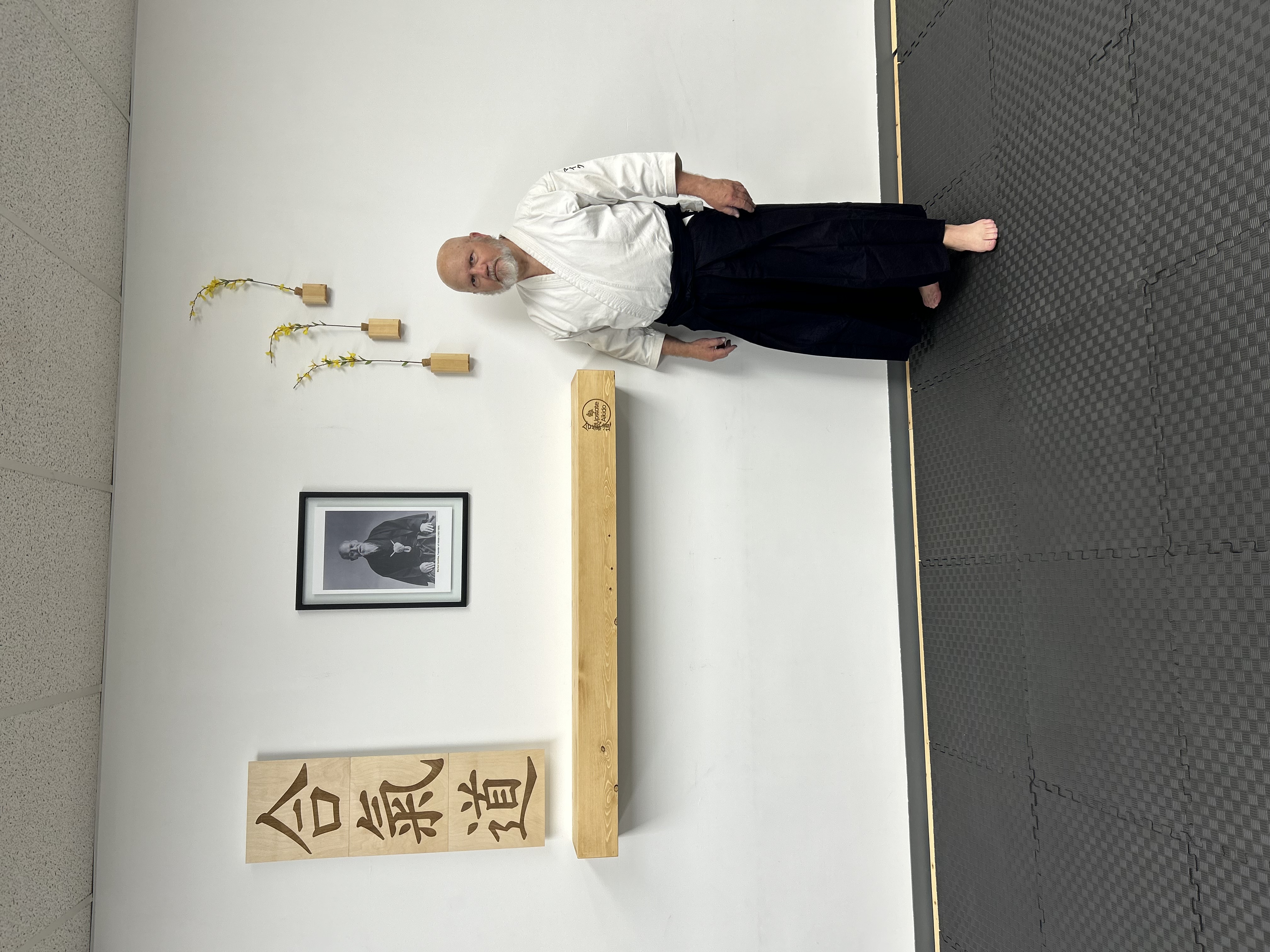
Let us know if you have any questions about Aikido or our Dojo.
Questions?
Monthly Membership
- Attend Any/all Applicable classes for 1 fee
- No Long term Contract (month to month)
- cancel Any Time
Adult/Teen $150/mo
Children $130/mo
Ask about our family plan! Get Started
Monthly membership includes:
- Any/All Classes for your group (Adult/Teen or Children)
- Become a member of United States Aikido Federations (After first testing) - and may attend classes at any Aikikai (mat fees may apply)
- Discounts on Gi's, Weapons, Bags and other Equipment (Optional)
- Free Mat time for practice (See Schedule)
- Free cold water and juices for your class
- Monthly - cancel Any Time
Aikido Schedule.
Classes are generally one (1) hour. Please attend any applicable classes as often as possible.
Date
( Weekly Aikido Schedule )- 4:00 pm
-
Kids Class- Sensei Mike
- Christine - 5:00 pm
-
Adults- Open Tatami
- 6:00 pm
-
Adult Class- Sensei Mike
Tuesday
- 8:30 am
-
Adult Class- Sensei Mike
- 7:00 pm
-
Adult/Teen Class- Sensei Mike
Wednesday
- 4:00 pm
-
Kids Class- Sensei Mike
- Christine - 5:00 pm
-
Adults- Open Tatami
- 6:00 pm
-
Adult Class- Sensei Mike
Thursday - NOTE: No Thursday class 08/14/2025
- Unscheduled
-
Reserved for Special Events and Testing
Saturday reserved for special events
- 6.30 pm
-
Paschimottanasana- Jason Response

- 8:30 am
-
Namaste Yoga- Ruby Vov Rails

- - Closed -
-
Rest of the Time
Some Reasons to Study Aikido
Aikido is a martial art, and there are great benifits to studying martial arts in general. But there are many reasons to study this particular martial art other than just self defense.

Increased Balance
By focusing on maintaining one's center of gravity, understanding leverage, and practicing circular movements, Aikido helps develop both physical and mental balance. Repeated practice of falling and regaining equilibrium also strengthens the body's ability to recover balance quickly.

Coordination
Aikido significantly enhances coordination through its emphasis on mindful movement, balance, and body awareness. By focusing on blending with an attacker's movement and redirecting their force rather than resisting it, Aikido develops a strong connection between mind and body, improving overall physical coordination and responsiveness.

Reaction and Sense of Timing
Aikido enhances reaction time and timing through focused practice on body awareness, balance, and efficient movement. By emphasizing blending with an opponent's energy rather than resisting it, Aikido trains practitioners to anticipate and respond to attacks with fluidity and precision.

Improved Posture and Flexibility
Aikido movements emphasize maintaining a balanced and integrated posture, even during dynamic techniques.
Relaxation is crucial in Aikido for generating power and executing techniques effectively, and this focus also encourages the release of tension that can restrict flexibility. The techniques themselves involve controlled bending and twisting, improving the flexibility of the joints and connective tissues over time.

Aerobic Conditioning
Aikido can contribute to aerobic conditioning through its emphasis on dynamic movements, falling techniques (Ukemi), and the overall physical activity involved in training. While not a primary focus like in some other sports, the continuous movement, paired practice, and cardiovascular demands of Aikido can improve endurance and overall fitness.

Greater Awareness of our bodies
Aikido enhances body awareness through its focus on coordinated movement, posture, and breathing, fostering a deeper connection between mind and body. Practitioners learn to move from their center, understand how to use their body as a unified unit, and develop sensitivity to their own body and the movements of others. This leads to improved balance, flexibility, coordination, and a greater sense of overall body control.